
During my six years at Red Caffeine, I built a strong relationship with my client, Bales Metal Surface Solutions. Bales specializes in metal coatings that reduce friction, prevent sticking, and help manufacturers produce more, higher-quality parts per cycle. What a win, right? Unfortunately, the customer experience wasn't quite as smooth. Customers loved Bales' coatings, but they didn't always understand how they worked, why they were being recommended, or when they'd get their parts back. In an industry measured in cycles, time is quite literally money, and confusion walks to the competitor.
That's where I saw an opportunity to completely rethink the customer experience. I developed an automated sales flywheel that kept customers informed, positioned Bales as the technical expert, and used lead scoring to help the sales team focus on customers who actually needed their attention. Instead of chasing orders, we made reordering easier and gave sales a reason to call at the right time.
I led the creative direction and built much of the work myself, connecting customer research, UX/UI, automation, design, photography, and team execution.
Before we get into how I built it, let's talk about what came out of it:
Real Customer Results:
13% Over Revenue Target
20% Year-Over-Year Account Growth
Net Promoter Score Increased to 74
Minimum Order Size Tripled Year-Over-Year
Client: Bales Metal Surface Solutions
Agency: Red Caffeine
My Roles: Senior Art Director and Production & MarTech Manager
Jump Around:
1. Discover · 2. Map · 3. Inform · 4. Design and Lead · 5. Review
Step One: Walk the Floor. Find the Real Brief.
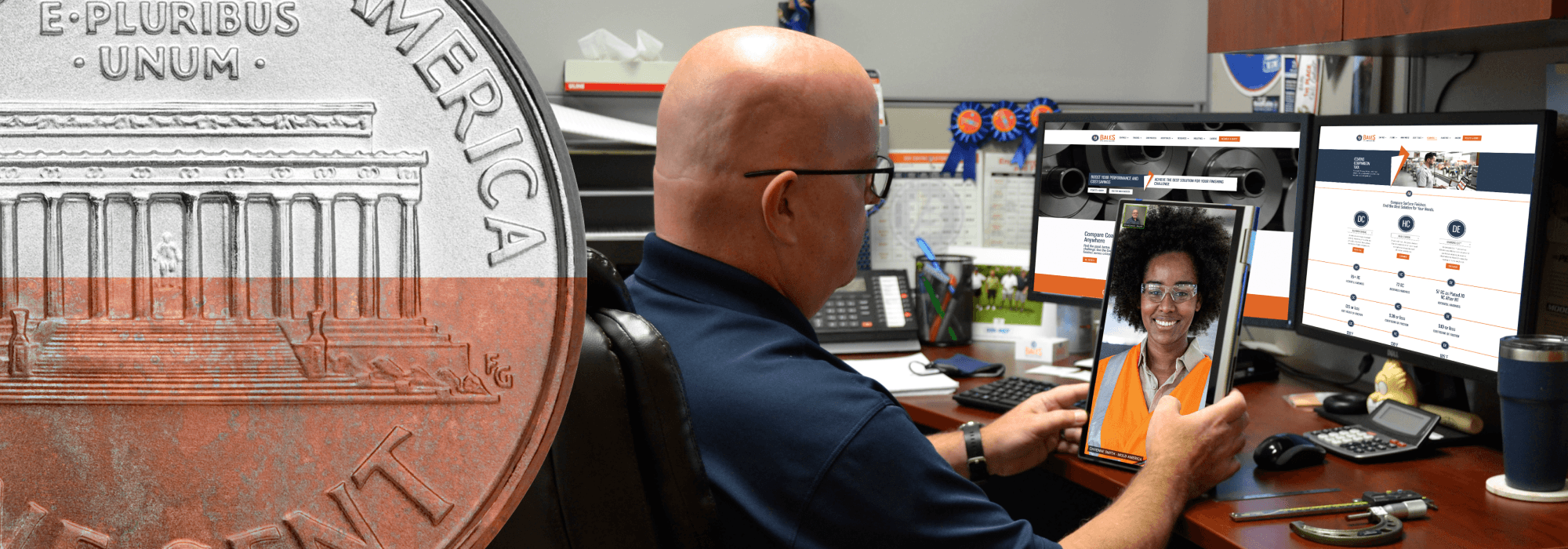
Q4 is typically a slower time of year for Bales, with holiday plant shutdowns and maintenance windows approaching in Q1. The client wanted to use their remaining budget to rerun successful email campaigns. As an Art Director, my job is to advocate for the client, and I wasn't convinced recycling old content was the best investment. At our next meeting, I suggested a plant tour for our new Account Manager, grabbed my DSLR and iPad, and got ready to do some user research.
I'd spent four years building a great relationship with the sales team, so I asked one of them to walk me through the business as if I were one of the parts. We followed the entire journey, from the first customer conversation through receiving, cleaning, coating, shipping, and hopefully, reordering. A conversation with shipping revealed our first major gap: orders were going out on time, but customers had little idea what was happening in between. That opened the floodgates.
After the tour, I sat down with the sales team and co-owner Sara Mortensen to discuss what we'd uncovered. Salespeople were chasing cold leads while customers struggled to understand their coating options and order status. We had the data to solve both problems, but weren't putting it to work. The original brief was to rerun an email campaign. I'd uncovered an opportunity to rethink the entire customer experience, from first contact to repeat order.
Step Two: Map the Gaps From First Contact to Repeat Order
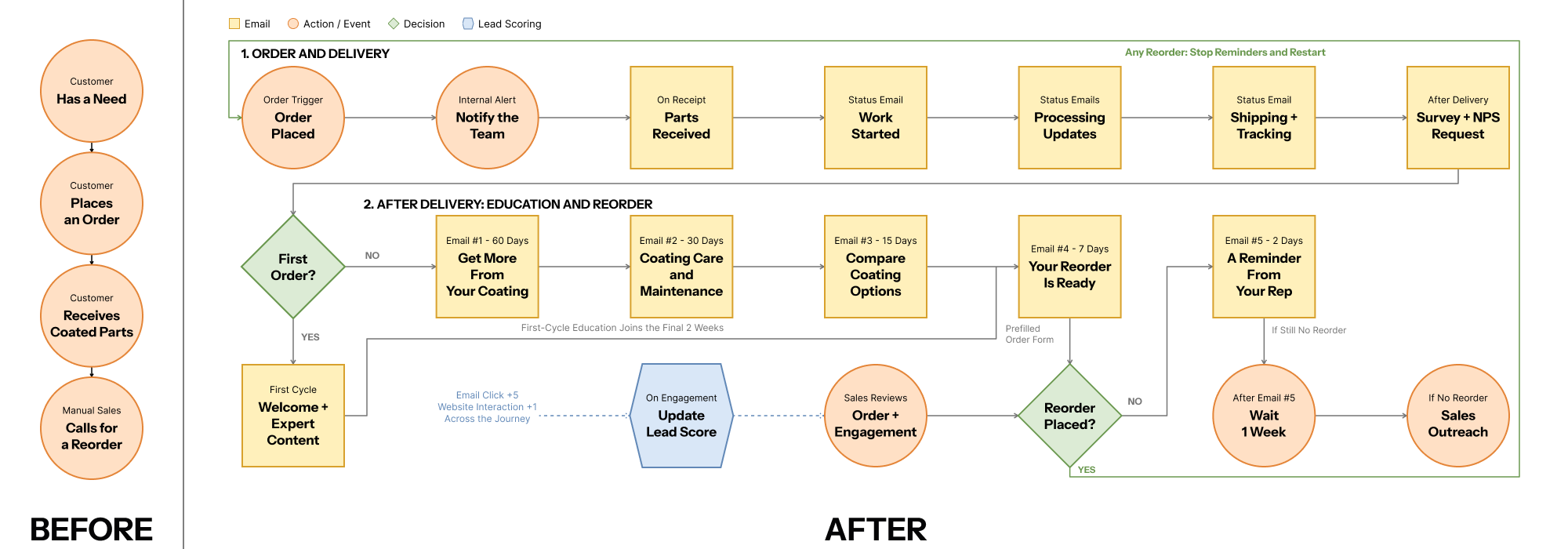
In FigJam, I mapped the existing customer experience and marked where information stopped moving. Then I mapped the proposed experience beside it, connecting each gap to something we could build.
The idea was to make every step work a little harder. Order updates would keep customers informed, educational content would help them understand their coatings, and maintenance reminders would lead naturally into reordering. Meanwhile, lead scoring would tell sales who was engaged, who needed a call, and who was likely to reorder on their own. First-time customers would even get their own introduction to Bales before joining the regular cycle.
With a website redesign already on the horizon, we had the perfect opportunity to connect everything and build solutions the client hadn't even considered. What started as a simple email campaign was becoming an automated customer experience that could keep working long after the first order.
Step Three: Put Useful Follow-Up on Autopilot
Working with shipping and logistics, I connected customer and order data to automated updates throughout the coating process, from the moment parts arrived to their return shipment. Think of it like a pizza tracker. If you've handed over an expensive piece of equipment, you probably want to know what's happening to it! Now customers could follow along without having to pick up the phone.
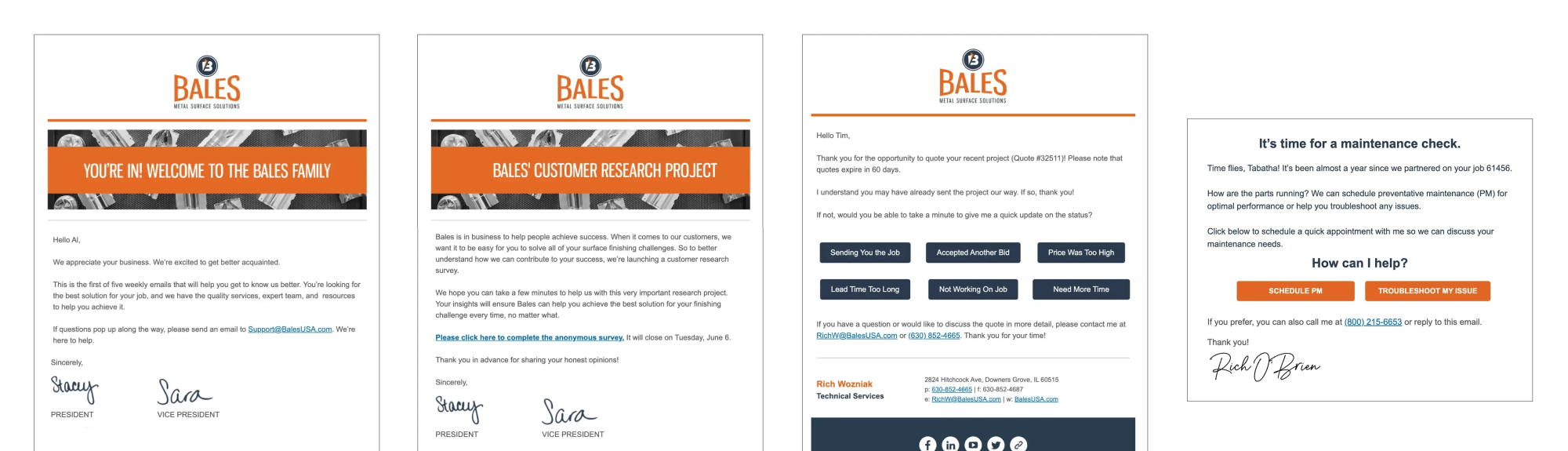
From there, I built out the customer journeys in Autopilot, now Ortto. New customers received introductions to Bales, while existing customers got surveys, maintenance tips, and educational content timed around their coating's expected lifespan. As reordering approached, personalized reminders made it easy to place another order. Behind the scenes, lead scoring tracked engagement so sales knew who needed a call and who was already on their way to reordering. We also supported the journeys with PPC retargeting.
Of course, automation is only as useful as the information you're sending. That's where Bales' technical expertise came in. I worked with our writer to turn that knowledge into FAQs, articles, and practical handouts that answered real customer questions while supporting SEO, AEO, and PPC. I also built a chatbot using LiveChat, drawing on technical documentation and the sales team's knowledge. Customers could get answers even when sales was offline, and anything the chatbot couldn't handle went back to a real person.

Step Four: Set the Direction. Then Get Into the Files.
With the strategy in place, it was time to get into the actual creative. I set the direction, but I also love getting into the files and making things myself. Working alongside our Account Manager, I developed the initial designs, established the visual direction, and gave our writer, remote designers, and developers a foundation to build from. I reviewed the creative before it went to the client for approval.
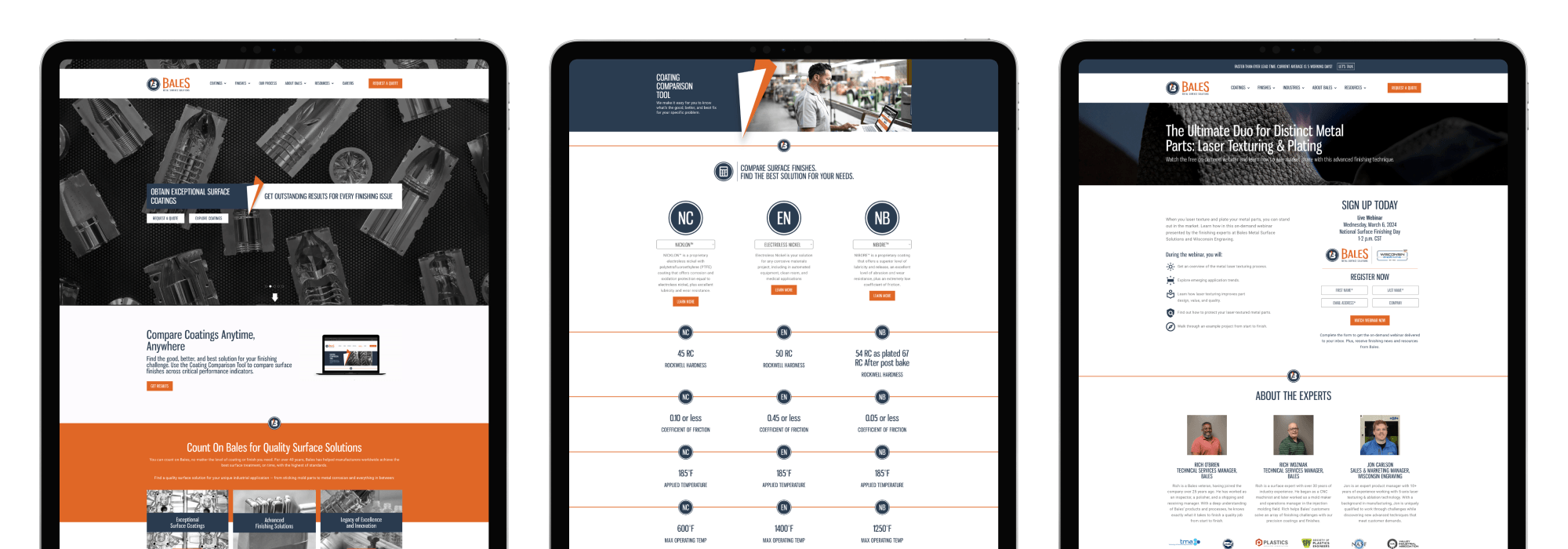
Most of Bales' website traffic came from mobile users, often looking for answers right on the shop floor. I designed a coating comparison tool that let customers compare options side by side, much like shopping for a phone or computer. I built the layouts, UI, and interactive prototypes in Figma, letting the client click through the experience before writing a single line of code. From there, I worked directly with our developers and even got into the HTML myself to make sure the finished site worked as intended.
The work went well beyond the website, too. I designed Bales' 45th-anniversary logo in Adobe Illustrator, built technical reports and sales materials in Adobe InDesign, and created reusable social templates in Figma. Remember that DSLR I brought on the plant tour? Those photos became part of the finished creative after I edited and retouched them in Adobe Lightroom and Adobe Photoshop. From the plant floor to the final layout, I had my hands in just about every part of the project.
STEP FIVE: LEAD IT THROUGH LAUNCH. KEEP IMPROVING.
Getting the creative approved was only part of the job. I stayed involved throughout development, reviewing layouts, functionality, and the overall user experience with our designers and developers. I used Markup.io for team proofing and caught issues before they reached the client. That meant staying hands-on and making sure the details survived the move from design to development, especially on mobile.
Of course, launching a website doesn't mean the work is finished! I used Hotjar to study how visitors interacted with the site before and after launch. Between behavioral data, client feedback, and ongoing creative reviews, we had a way to keep refining the experience based on how people actually used it.
Now, What Can I Solve for You?
Bales continues to use and adapt the system we built. What started as a request to rerun a few emails became an automated customer experience that keeps customers informed, helps sales focus on the right opportunities, and encourages repeat business. Best of all, we built something the team could keep using long after the original campaign ended.
That's the kind of work I love doing. At Red Caffeine, I led teams of up to 10 designers and developers, built an internal proposal tool that cut quoting time in half, and was named Employee of the Year five years running. I'm just as comfortable sitting across from a client figuring out what they actually need as I am rolling up my sleeves and building the solution.
“When the agency needed to adapt to remain competitive, he took responsibility for learning the technology and teaching the rest of us.”
Bill Skowronski, former Red Caffeine colleague
Put me in the room with the client, then let me get into the work. I'll ask the questions, find the opportunities, and give the team a direction they can actually deliver. If you're looking for a creative director who can take an idea from the first conversation through the finished product, let's talk.
